
Implementing the Kidney Health Initiative Surrogate Efficacy Endpoint in Patients With IgA Nephropathy (the PROTECT Trial)
Kidney International Reports – 2019

Background

Aim
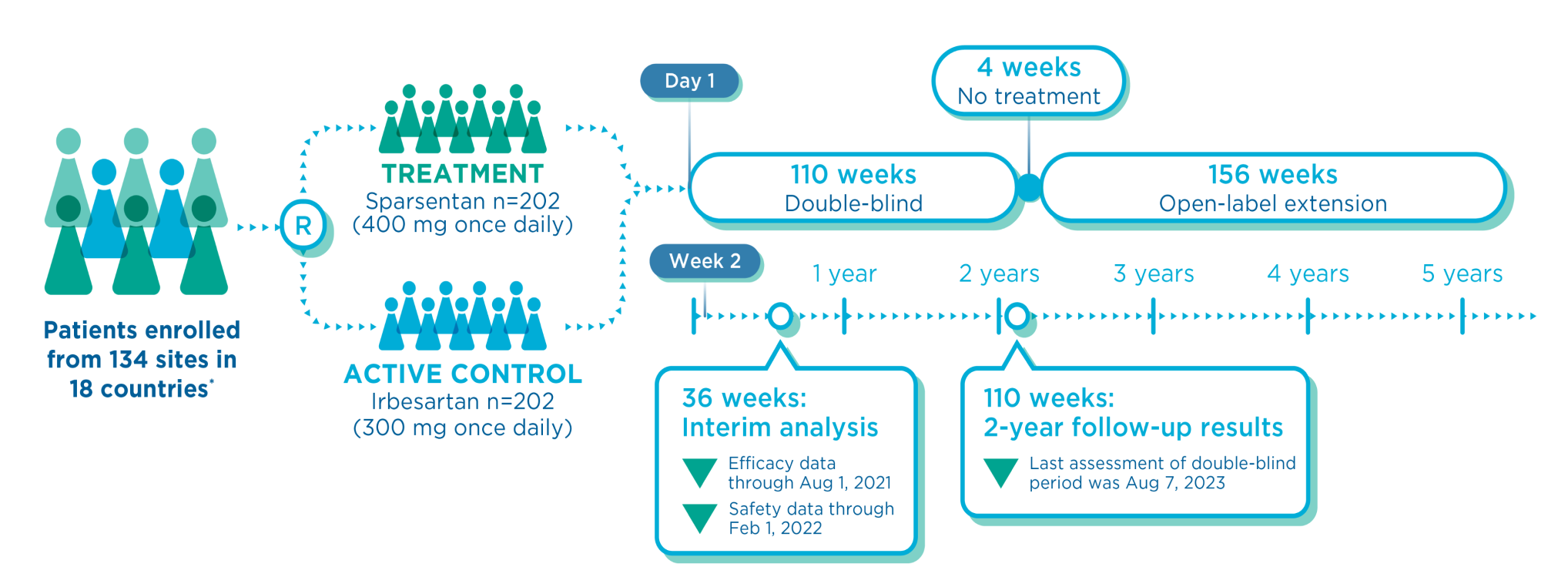
The PROTECT study evaluates long-term efficacy and safety of sparsentan versus irbesartan in IgA nephropathy6
PROTECT: A large, international, randomized,<br /> double-blind, active controlled Phase 3 trial
Key findings

Sparsentan met its primary endpoint showing superior reductions in proteinuria from baseline to Week 36 versus irbesartan. This reduction was sustained over 2 years5-7

The absolute LS mean change in eGFR from baseline to Week 110 was smaller with sparsentan versus irbesartan, demonstrating a greater preservation of kidney function with sparsentan5,6

The safety profile of sparsentan is comparable with that of irbesartan5,6

The most common AEs with sparsentan were hyperkalemia,† hypotension, peripheral edema,† dizziness,† anemia, acute kidney injury, and transaminase elevations5‡
Most common AEs are per the FDA US Prescribing Information

There were no instances of drug-induced liver injury or discontinuations due to heart failure or edema6
Conclusions
Sparsentan demonstrated5,6:

Projected eGFR data of sparsentan and irbesartan suggest prolonged kidney survival with sparsentan6
Related Content
Implementing the Kidney Health Initiative Surrogate Efficacy Endpoint in Patients With IgA Nephropathy (the PROTECT Trial)
Kidney International Reports – 2019
IgA Nephropathy Patient Baseline Characteristics in the Sparsentan PROTECT Study
Kidney International Reports – 2023

Sparsentan in Patients With IgA Nephropathy: A Prespecified Interim Analysis From a Randomised, Double-Blind, Active-Controlled Clinical Trial
The Lancet – 2023
*Participants were enrolled between December 2018 and May 2021.6 †Includes related terms.5 ‡Elevations in ALT or AST greater than 3-fold ULN.5
AE, adverse event; ALT, alanine aminotransferase; Ang II, angiotensin II; AST, aspartate aminotransferase; AT1R, angiotensin II subtype 1 receptor; DEARA, Dual Endothelin Angiotensin Receptor Antagonist; eGFR, estimated glomerular filtration rate; ET-1, endothelin 1; ETAR, endothelin type A receptor; FDA, Food and Drug Administration; IgA, immunoglobulin A; ULN, upper limit of normal; UPCR, urine protein-creatinine ratio.
MA-SP-24-0049 | November 2024